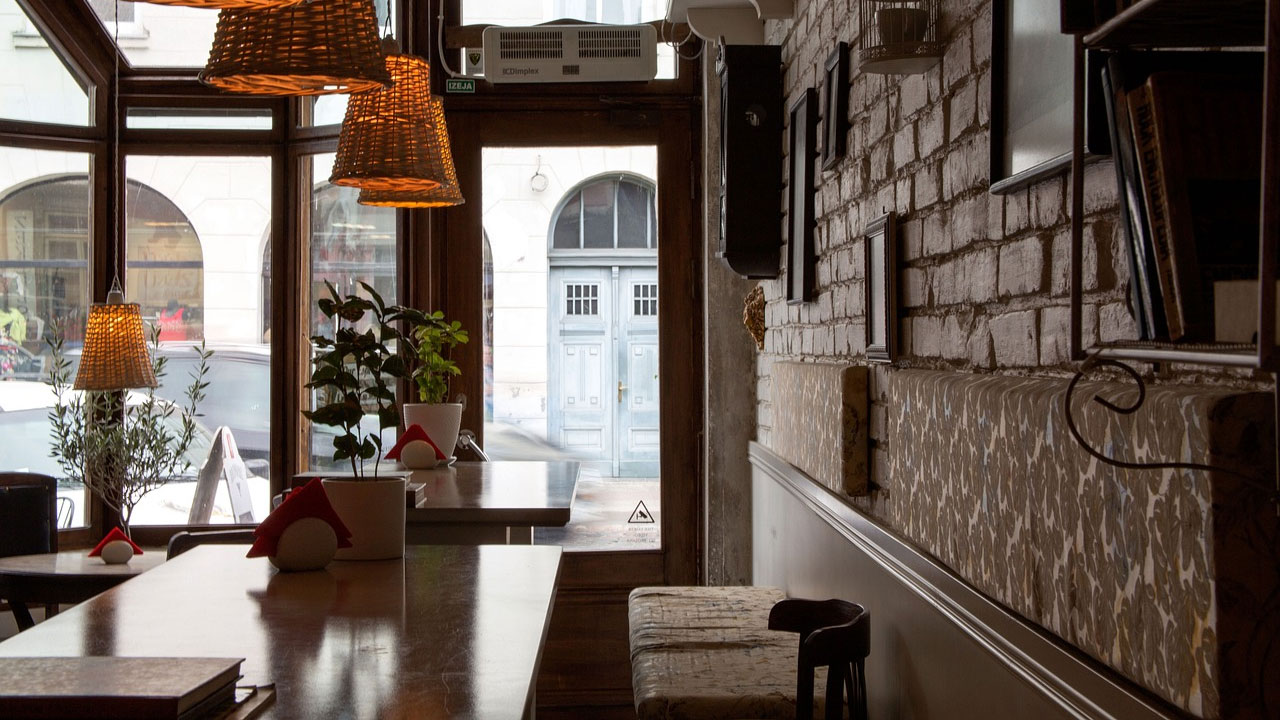

A few years back, I had a ritual. I'd walk to the nearest Starbucks, get a coffee, and bury myself in work. I came so often that I knew all the baristas and their schedules. I also started noticing the music. There were songs I loved but never managed to catch the name of, always playing at the most inconvenient times for me to Shazam them. It felt random, but I began to wonder: Was this playlist really on shuffle? Or was there a method to the music?
I never got a definitive answer from the baristas, but I started to observe a pattern. During the morning rush, around 8:30 AM when I'd desperately need to take a call, the music was always higher-tempo and noticeably louder. The kind of volume that made phone conversations nearly impossible. By mid-day, the vibe shifted to something more relaxed, almost lofi. The perfect backdrop for a deep, focused coding session when the cafe had thinned out and I could actually hear myself think. Then, after 5 PM, the "social hour" began. The music became familiar pop, at a volume that allowed for easy conversation, making the buzz of surrounding tables feel part of the atmosphere rather than a distraction.
The songs changed daily, but the strategy was consistent. The music was subtly, or not so subtly, encouraging different behaviors at different times of day. It wasn't just background noise; it was a tool.
And as it turns out, my coffee-fueled hypothesis was correct. This isn't limited to Starbucks, it's a research backed strategy used across the hospitality industry. The music isn't random. It's designed to influence you.
The Three Customers in the Cafe Symphony
Research shows that we can broadly group cafe patrons into three archetypes, each responding differently to the sonic environment. Let's break them down.
1. The Soloist (The Worker)
This is you and me, with a laptop, hoping to grind through a few hours of work. Our goal is focus, and the cafe's goal is often to prevent us from camping out all day on a single coffee.
What the Research Says: A recent field experiment confirmed that fast-tempo music leads to patrons leaving more quickly. Those exposed to fast-tempo tracks spent significantly less time in the establishment than those who heard slow-tempo music or no music at all. For the solo worker, loud or complex music creates a higher "cognitive load," making sustained concentration difficult.
That upbeat, intrusive morning music isn't an accident; it's a gentle nudge to keep the line moving. When you're trying to write code or draft an email and the music suddenly shifts to something with a driving beat and prominent vocals, your brain has to work harder to filter it out. Every decision, from what variable to name to which sentence structure to use, becomes just a little more taxing. I'm trying to write a function and a song is stuck in my head. "I just wanna use your love tonight!" After an hour or two of this cognitive friction, packing up and heading somewhere quieter starts to feel like a relief rather than an inconvenience.
2. The Duet (The Pair Catching Up)
This pair is there for conversation. You meet up with a friend you haven't seen in some time. You want to catch up, and the music acts as a double-edged sword.
What the Research Says: The key here is volume. Very loud music can shorten a visit because it makes conversing difficult. You have to lean in, raise your voice, and constantly ask "What?" Research on acoustic comfort in cafes highlights another side: music at a moderate level acts as a "sonic privacy blanket." It masks their conversation from neighboring tables better than silence, making the pair feel more comfortable and less self-conscious.
I've experienced this myself. When catching up with a friend over coffee, there's an awkward awareness in a silent cafe that everyone can hear your conversation. Are you talking too loud about that work drama? Can the person at the next table hear you discussing your dating life? But add a layer of moderate background music, and suddenly you feel like you're in your own bubble. You can speak freely without constantly monitoring your volume or censoring yourself. The relaxed, mid-day tempo isn't just for solo workers. It's also giving pairs the acoustic privacy to linger over a second latte, perhaps order a pastry, and feel comfortable enough to stay for another thirty minutes.
3. The Chorus (The Social Group)
The group of three or more is there for the vibe. Their primary goal is to connect with each other, and the music is part of the experience.
What the Research Says: Studies on background music and consumer behavior show that for social groups, louder, more upbeat music increases physiological arousal, which translates into a sense of excitement and fun. This positive state is directly linked to impulse purchases, and a longer stay. "Let's get another round!" The music effectively masks the group's own noise, allowing them to be loud without feeling disruptive.
The familiar pop tunes of the evening are an invitation to relax, stay, and spend. That energy translates into staying longer, ordering another drink, maybe splitting some appetizers. The music gives permission for the group to match its volume and enthusiasm. If the cafe is already vibrating with sound, your group's laughter doesn't feel excessive, it feels appropriate.
The Hidden Economics of Sound
The music is not random, it's calculated. I have a private office in a coworking space. What I find interesting is that whenever I go to the common area, where most people work, there's always music blasting. Not just playing. Blasting. You couldn't possibly get on a meeting call in the common area, even though this is basically a place of work.
For that, there are private rooms that you can rent by the minute.
Let that sink in for a moment. In a place of work, it's hard to justify music playing in the background loud enough to disrupt actual work. Unless it serves a very specific purpose: getting you to rent a private room.
The economics makes sense. I did a quick count on my floor. The common area has thirty desks but only eight private rooms. If everyone could take calls at their desks, those private rooms would sit empty. But crank up the music to 75 decibels, throw in some upbeat electronic tracks with prominent basslines, and suddenly those private rooms are booked solid at $5 per 15 minutes. That's $20 per hour, per room, eight rooms, potentially running 10 hours a day. The music isn't there to help people focus. It's a $1,600 daily revenue stream disguised as ambiance.
And the best, or worse, part is that nobody complains. Because nobody wants to be the person who admits they need silence to think. We've all internalized the idea that professionals should be able to work anywhere, under any conditions. So we grimace, throw on noise-canceling headphones, and when we inevitably need to take a Zoom call, we sheepishly book a room and swipe our credit card.
And then there is AI
Until now, this process has been relatively manual. A manager chooses a playlist or subscribes to a service (like Spotify's "Coffee House" or "Lofi Beats") and hopes it has the desired effect. It's a best guess based on time of day and general principles.
But what if a cafe could move from curating playlists to engineering soundscapes in real-time? This is where generative AI will play a part.
Imagine a system where:
-
Simple sensors can count the number of customers in the establishment and feed real-time information to an AI. Point-of-sale data shows the average ticket per customer and table turnover rates. The AI receives a constant stream: "It's 2:30 PM. The cafe is 40% full, primarily with solo workers on laptops. Table turnover is slowing down, average stay time is now 97 minutes, up from the target of 75 minutes."
-
An AI composer, trained on psychoacoustic principles and the cafe's own historical data, generates a unique, endless piece of music. It doesn't select from a library. It is created in realtime. The manager has set a goal: "Gently increase turnover without driving people away." The AI responds by subtly shifting the generated music to a slightly faster BPM. Maybe, from 98 to 112 beats per minute. It introduces more repetitive, less engrossing melodies. Nothing jarring, nothing that would make someone consciously think "this music is annoying," but enough to make that coding session feel just a little more effortful.
-
The feedback loop measures the result. Did the solo workers start packing up 15 minutes sooner on average? Did they look annoyed when they left, or did they seem natural? Did anyone complain to staff? The AI learns and refines its model for next time, adjusting its parameters. Maybe 112 BPM was too aggressive; next time it tries 106 BPM with slightly less complex instrumentation.
This isn't science fiction. The technology exists today. We already have:
- Generative AI that can create music in any style (MusicLM, MusicGen)
- Computer vision that can anonymously track occupancy and behavior
- Point-of-sale systems that track every metric in real-time
- Machine learning systems that can optimize for complex, multi-variable outcomes
Any day now, you'll see a start up providing this service. Where the ambiance of a space is not just curated, but designed. A cafe could have a "High Turnover Morning" mode, a "Linger-Friendly Afternoon" mode, and a "High-Spend Social Evening" mode, with the AI seamlessly transitioning between them by generating the perfect, adaptive soundtrack.
One thing that I find frustrating with AI is that when we switch to these types of systems, you never know. The music would always feel appropriate, never obviously manipulative. It would be perfectly calibrated to nudge you in the desired direction while remaining just below the threshold of conscious awareness. A sonic environment optimized not for your experience, but for the business's metrics.
When does ambiance become manipulation?
There's a difference between playing pleasant background music and deploying an AI system that continuously analyzes your behavior and adjusts the environment to influence your decisions. One is hospitality, the other is something closer to behavioral engineering.
And unlike targeted ads online, which we're at least somewhat aware of and can block, this kind of environmental manipulation is invisible, unavoidable, and operates on a subconscious level. You can't install an ad blocker for the physical world.
I don't have answers here, only questions. Should businesses be required to disclose when they're using AI to manipulate ambiance? Is there a meaningful difference between a human selecting a playlist to achieve certain outcomes and an AI doing the same thing more effectively? Does it matter if the result is that you leave a cafe five minutes sooner than you otherwise would have?
These are conversations we need to have as consumers, as business owners, as a society. Now we know that the quiet background music in your local cafe has never been just music. It's a powerful, invisible architect of behavior. And it's about to get a whole lot smarter.



Join the Conversation