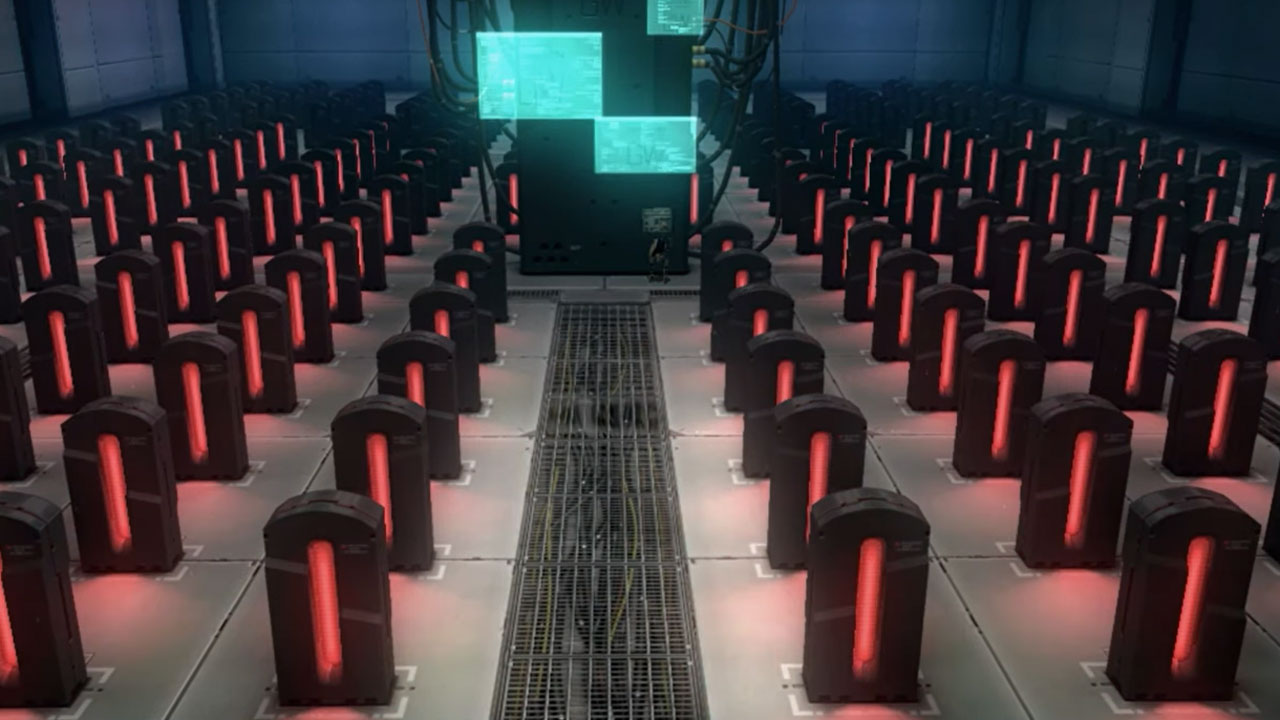

When OpenAI released the first version of Sora, I was excited. For years, I'd had this short story sitting on my hard drive, something I'd written long ago and always dreamed of bringing to life as a short film. The only problem was I didn't have the expertise to shoot a movie, and my Blender 3D skills are rusty for lack of use. But Sora promised something different. I could upload my sketches, input my script, and generate the film in my mind. The creative barrier had finally been lifted.
But reality was a bit different from the demos. No matter what I tried, my outputs never looked anything like what OpenAI showcased. The scenes were adjacent to what I wanted, not what I actually needed.
It wasn't just Sora. I tested Runway ML, experimented with Veo, and tried to keep my spending reasonable. Every model generated the same kind of thing: something that "looked good" in a superficial way. They excelled at creating cliché scenes, the kind of generic image that checks all the technical boxes. But creating something that could fit into a coherent narrative, something with intention and specificity? That was nearly impossible.
When Sora 2 launched, I started right where I left off. Maybe this time would be different. The videos are more realistic than ever, but the main problem remains unchanged. These tools aren't struggling because they can't generate scenes or dialogue, they sure can. The issue is that they generate what I've come to call "AI Videos," and that's a distinct category with its own aesthetic fingerprint.
The New Uncanny Valley
Think about how you instantly recognize certain types of content. If I described a video to you right now: fast-paced, someone talking directly to a screen with multiple jump cuts, a ring light's circular reflection visible in their eyes, their bedroom visible in the background. You would instantly say "TikTok video." The format is hard to miss these days.
AI-generated videos have developed their own unique look. There's a visual quality that marks them, a subtle wrongness that your brain picks up on even when you can't articulate exactly what's off. It's the new uncanny valley, and I feel an intense revulsion whenever I encounter it. I'm not alone in this reaction either. In my small circle of friends and colleagues, we've all developed the same instinctive aversion.
I'm starting to feel the same revulsion for YouTube shorts even when they are created by real people. The reason is, well, YouTube has been secretly using AI to alter real videos, making authentic content start to look artificially generated. You will notice people's faces look smoothed or sharpened, and that happens without the creator's knowledge or consent. The line between real and AI-generated content is blurring from both directions.
So if these videos trigger such a negative response in many viewers, where can AI-generated content actually thrive? The answer: with spammers, scammers, rage-baiters, and manipulators.
These bad actors are having a field day with AI video tools. A couple months ago, I wrote about AI Video Overviews, I speculated that Google might eventually start using AI-generated videos as enhanced search results, synthesizing information from multiple sources into custom video summaries. That remains speculative. But for harmful content? That's not speculation, it's happening right now, at scale.
The Primary Victims
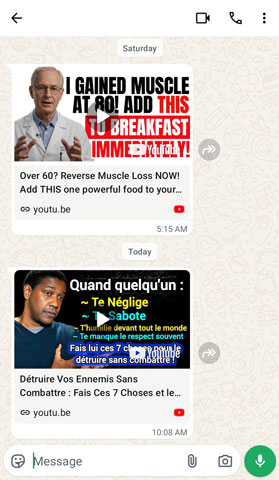
The main targets are older adults. My parents and their peer group are constantly sharing AI-generated videos in their group chats and on social media. Even as I write this, my mother just sent me a video showing Denzel Washington giving life advice, entirely fabricated, of course.
There is a wide variety of content. Health misinformation, sensational fake news, videos claiming Obama has embraced Islam, an elderly Tai Chi master giving dubious health tips, Trump supposedly reversing or doubling down on positions he never actually took. The specific claims change daily, but the pattern remains constant.
These videos spread like wildfire despite our collective, repeated efforts to educate people. I've spent countless hours explaining why these videos are fake. In my community group chat, I've explained the telltale signs multiple times, like the little cloud icon with eyes that appears on AI-generated content (sora watermark). I've shared practical tips: if a video seems too good or too shocking to be true, search for the information on Google to verify it. Nothing seems to stick.
Some days, according to these videos, we're at war. Other days, entire cities have burned down, or a tsunami has devastated Los Angeles. You can't debunk faster than this information spreads.
When you find these videos on YouTube, scroll down to the comments. You'll see real people engaging seriously with fabricated content, offering heartfelt responses to synthetic personas, debating points that were never actually made by the people shown in the videos. I get phone calls from family overseas, people reach out, or share what they think is happening right at my doorstep. When I ask where they heard it? They forward a whatsapp video.
There's no easy solution to this crisis.
AI video technology has found its audience, just not the audience the marketing materials promised. These tools weren't really designed to help people like me overcome technical limitations and bring our stories to life. They were made to enable those who want to manipulate, deceive, and exploit people for engagement, profit, or ideology.
I've tried to find legitimate, beneficial use cases for AI video generation. I've thought about educational applications, accessibility features, and experimental art projects. Maybe they exist in theory, but in practice, I keep coming back to the same conclusion.
Right now, every AI video I encounter is harmful. Every single one, without exception.
Either it's directly harmful like spreading misinformation, impersonating real people, manipulating vulnerable viewers. Or it's indirectly harmful by training us to accept a synthetic reality where nothing can be trusted and everything must be questioned. Even the "harmless" AI videos contribute to a broader erosion of trust in visual media.
This technology is devastatingly effective for the purposes bad actors have found for it. The creative barrier I hoped to overcome remains in place. But now there's a new barrier too. The barrier of trust. And that one might be much harder to rebuild.



Hey Ibrahim,
thank you for bringing this thoughts to the proverbial paper.
The only ok-isch usecase for ai videos I saw in the wild is something like schlatologie on youtube. AI can be used for unique art. These clips are not mass produced from simple prompts but instead subject to extensive pre- and postproduction.
Your point about the seemingly veracity of video content to vulnerable groups is of course still valid. This is actively harmful for our society at large.
Cheers Mirco
Hi @Mirco, thanks for sharing. I remember seeing a similar type of video during the American elections with our own politicians. I can certainly classify those as the "Harmless" videos made purely for entertainment.
There are places where it can be useful, like VFX and video editing where it can help you fix a shot in a way that it wasn't possible before. There is going to be useful things that come out of it, I'm sure of that. But that will in parallel to the sea of slop that it naturally encourages.
I've fought telemarketers and spammers since I had my first telephone in the 80s, one line for the computer to compuserve and one line to the answering machine. I had fun. Mimicing an old man and giving scammers fake credit cards generated from info via 2600 magazine until their processor shut them off.
In Indianapolis I had one local scammer come to my apartment and try and break in. I'd finally gotten bored and told them what I'd done as their CC processing died. So a 911 call and some hohum and IPD near broke my door smashing him against it while I'd been holding a 1911 clone and chatting with the 911 woman who sounded cute. The prosecutor lost the answering machine tape that autorecorded it which I'd given them in a dull wittedly illucid moment so I had no copy. They claim they lost the tape.
My family knows to bait anyone trying to get money out of them as if it's me. I've bummed too much and then when I never bummed again I told them to treat me like they should have treated me back then but for the love of all that is neo-holy RECORD IT!
I'd help people set up automatic honey pots to build filters for their servers. Seed website with seemingly valid phone numbers and credit card information, banking information, etc. etc. All done as carefully as I could so they would definitely fail when processed but pass local checking.
Now? I run all of my own crap. I don't go to search engines because they've gone irrational, I dearly would love the return of webrings, manually curated news agrigators and other ancient human tech. I do run a limited web crawler which is highly specific to my needs.
Oh using your handy voice masker ask the person on the phone if they have big'uns and see how the AI handles it. :-D
Yea I'm old but so far the alkyshimers is ... not in charge. I still may not be quite sane though.
There is another things that's happening. There is so much slop that I recently noticed the following in myself:
There are, of course, exceptions, but it's like... I now need to know for sure if there is a substance behind what I see/hear.
Fun fact: I implement AI agents as a daily job (but luckily our use case doesn't produce AI slop - i.e. it's purely assistive and covers routine, not creativity). So there are use cases where it's good, but it's just not worth it compared to the damage it's doing to culture and our brains. Yet, it doesn't look like it can be stopped. I'm trying to adapt, but secretly hoping that we somehow will go back to normal some day again.
Join the Conversation