
I had a 383-day streak on Duolingo. Three hundred and eighty-three days of that green owl peeking through my notifications, reminding me that my streak was in danger. I wrote about how I never actually learned Spanish from Duo, but I kept coming back. Not for the language, but for the streak. The number itself became the point.
Then one day, I forgot. Life happened. The streak died.
Now imagine this. Right when that happens, right when you see that devastating zero where your 383 used to be, a popup appears. It's colorful, animated, and encouraging. "Spin to Save Your Streak!" it says. You can use 50 gems (which you've accumulated, or could buy) for a chance to restore everything. The wheel spins with satisfying sounds, the same dopamine-triggering clicks and whirs you've been conditioned to love from every other part of the app.
One in ten chance. Maybe one in twenty. The odds don't really matter because you're not thinking about odds. You're thinking about 383 days. About the sunk cost. About how stupid you'd feel if you didn't at least try.
Does this feel out of place? Not at all.
It feels like the natural next step. Because Duolingo already has gems, streak freezes, legendary levels, and a shop where you spend currency you've earned or purchased. The infrastructure for gambling is already there. If they flip the switch, you are not even going to notice.
The Logical Progression
The point I'm trying to make is that now that we have gamified everything, gambling becomes the logical next step. It doesn't even disrupt the UX. It feels like natural progression.
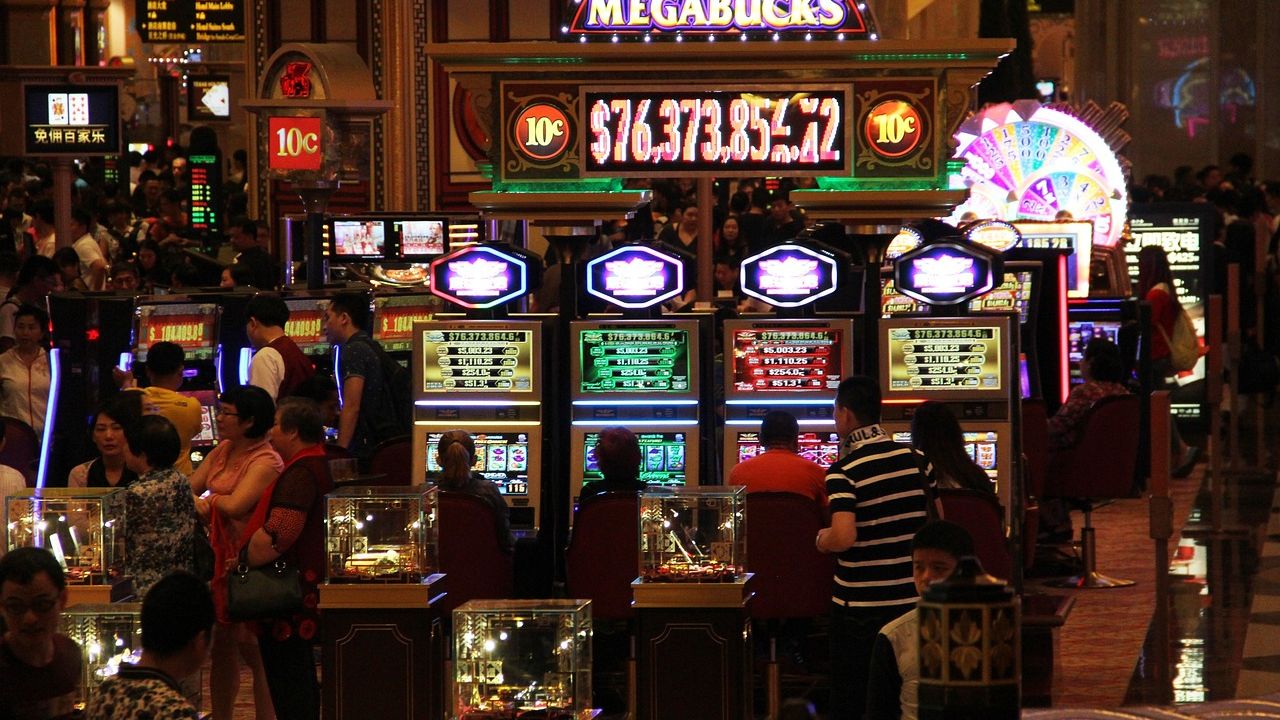
We've spent the last decade training ourselves to accept game mechanics in every aspect of life. Points, levels, streaks, loot boxes, random rewards, daily bonuses, competitive leaderboards. We've normalized the psychological hooks that make slot machines addictive, then sprinkled them across education, fitness, productivity, and social interaction.
So when gambling shows up, actual gambling with money and uncertain outcomes, it doesn't register as a violation. It just feels like... more of the same. A natural evolution of features we've already accepted.
When Education is Fun!
There is substantial evidence from educational psychology and neuroscience that fun and enjoyment significantly enhance the educational process and lead to improved learning outcomes.
That's the quote I get from asking several LLMs if there is any evidence that fun learning is more effective. Here are some of the cited sources:
- The impact of enjoyment on learning retention
- Scientific evidence confirms learning must be fun
- Why fun matters more than you realize
- Gamification and it's effectiveness in schools (note: they make gamified learning apps)
But the more I read them, the more a pattern emerges. The claim is that dopamine helps us learn better.
Why does dopamine matter? It's the chemical most commonly associated with pleasure and reward. When we experience something enjoyable, our brains reward us with good feelings as if to say, "Hey, that felt good. Remember to do that again." Not only does dopamine make us feel good, it helps with attention, motivation, and memory.
So naturally, we need to make sure we turn every learning interaction into a dopamine-inducing activity. Imagine for a second that your physics class in college is gamified. For every concept you learn, your progress bar increases. You level up and gain reputation points. If I know anything about video games, it's that the actual learning will become secondary to the meta-game of point accumulation.
Students will start asking "How many points is this worth?" before thinking about what they are supposed to learn. The motivation to understand something is replaced by the experience points reward that feels suspiciously like what we feel when playing World of Warcraft.
That's how I was able to complete the Japanese course in Duolingo without ever learning to count to ten. I got the dopamine alright, but not the knowledge.
Meatspace Gamification
When my kids started talking about Labubu, I thought they were mispronouncing a french word. But it turns out it's a strange, weird-looking doll that took the world by storm. The toy itself serves no purpose. Kids aren't collecting them to play with them, to create stories, to build worlds. Instead, both kids and grown-ups are playing the game of finding a rare one. And when they finally do, they play the next game of collecting the next rare one.
It's blind boxes all the way down. The thrill isn't in the object itself, it's in the uncertainty, the odds, the chase. You don't buy a Labubu because you want that specific Labubu. You buy it for the slot-machine pull of not knowing what's inside. For the rush when you get a rare variant. For the social currency of having what others don't.
This is just loot boxes in physical form. And we've normalized it completely.
We are Primed to Gamble
We don't need to make everything fun and engaging. The evidence presented for "fun" things being more educational is weak. We could just say that taking a good dose of cocaine before class will help increase your dopamine. If gamification truly enhanced learning, we'd see it in outcomes. Instead, we see increased engagement metrics. Which is what the platforms measure because that's what drives retention and revenue.
If fun equals learning, then sure, let's add a dopamine bar next to your physics lesson. For every concept you learn, you progress and your character grows stronger. Defeat the boss battle at the end of each unit. Earn legendary skins for your scientific calculator.
What actually happens is that students learn to game the system. They optimize for points, not understanding. They chase streaks, not knowledge. They complete tasks for rewards, not because they're curious.
And once you've built that system where you trained users to respond to these game mechanics, then adding gambling doesn't feel like a betrayal. It feels like an upgrade. A premium feature.
The price to restore my streak was $13.99. Did I pay for it? No... but I wanted to! If there was an option to spin a wheel for a chance at half price, I would have probably done it. And that's exactly the problem. The infrastructure is already there. We are already participating. The path from gamification to gambling isn't a leap anymore. It's a small step that millions of users have already been primed to take.
Everything is gamified. Now let me spin the wheel on this month's rent.



From what I understand, there's no cultural growth without effort. That effort you feel especially when you have to do seemingly pointless things (calligraphy, studying a dead language, pointless math exercises). This is what my experience tells me. Learning while having fun is certainly a good thing, but sooner or later the obstacle, the hard one that requires effort, presents itself. And then there's no fun, there's effort, and that's the only way to grow. I see no other way. Growth isn't a path that can only be downhill; you build muscle on the way up.
Good point @Giovanni:
Building muscle is hard, while gamification and rewards encourages the path of least resistance to feel that fun again.
Join the Conversation