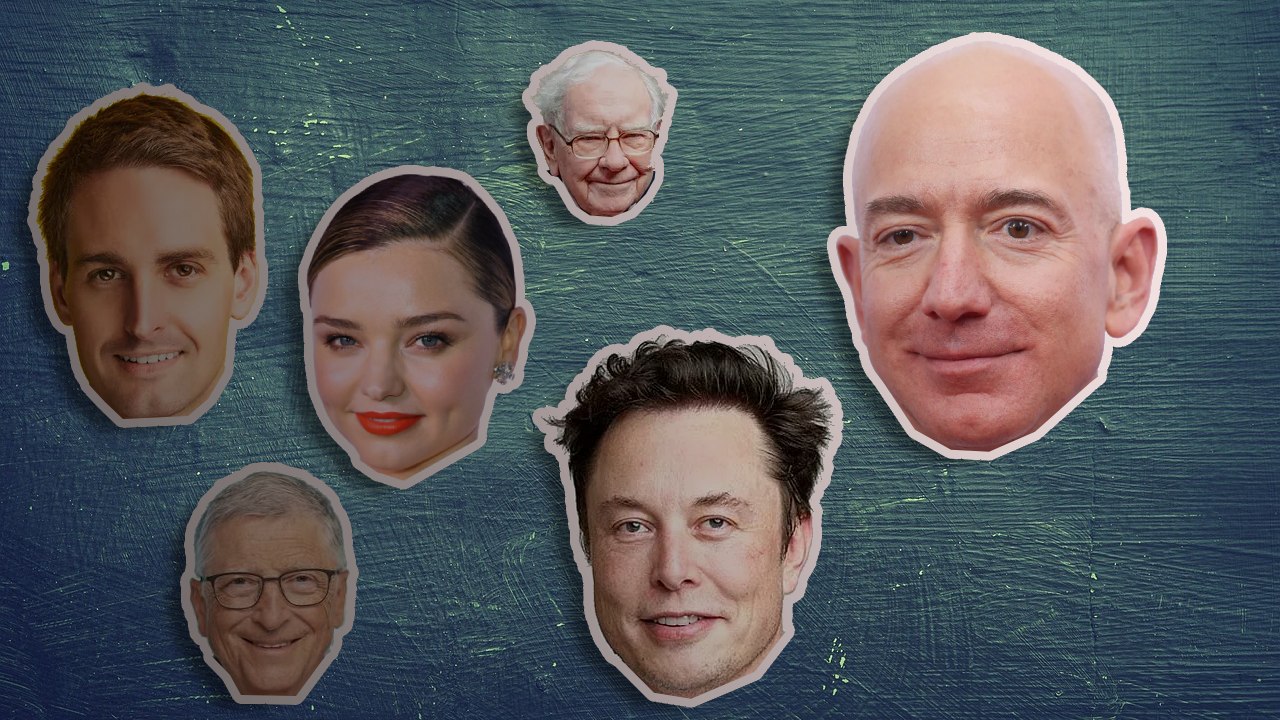

Imagine being worth $2 billion. Would you give away $550 million? That's a quarter of your wealth, more money than I could spend in several lifetimes. Yet that's how much Evan Spiegel, the CEO of Snapchat, and his wife have donated to a charity in California. Specifically, they donated to Undue Medical Debt, an organization that buys Californians' medical debts and expunges them. That's close to $9,200 for each recipient. A noble act.
I'm not one to tell you that billionaires shouldn't exist, or what is or isn't fair in a system I don't control. But one thing I've come to see over the years is that public good deeds are rarely what they seem. Whether it's a feel-good story on the news, a TV show pimping your car, or another turning your house into a mansion, there's an underlying truth that often gets obscured by the appearance of a good deed.
Bill Gates, who was once the richest man in the world, pledged to leave almost all his money to charity. Over the years this story has been repeated, and I'm the last person to tell you how to feel about it. For me, it's a good thing to help a charitable organization that's trying to help others. Last year, Bill Gates renewed this pledge, stating that he would give away around $200 billion and keep less than 1% for himself. I mean, $200 billion? That's crazy. Any charitable organization receiving even a fraction of that money will be able to do a lot of good with it, especially when Elon Musk said he could end world hunger with just $6.6 billion.
But that's only part of his statement. He isn't leaving his money to any random organization that needs it. He's leaving it to the Bill and Melinda Gates Foundation. That's a different thing. Not a bad thing, but it changes the statement from "I'm donating my money to charity" to "I'm going to use my money to do charity." The money moves from one pocket to another.
The point I'm trying to make is that good stories often come with a few asterisks. When I read the Evan Spiegel story, I was intrigued because, well, I'm Californian. I've been here for over 20 years, my kids were born and raised here, and so far I have no intention of going anywhere else. Oh, and I've had one of those surprising medical bills that nearly made me faint. (A story for another day)
Reading a story where a billionaire pays off people's medical debt makes you feel good. It made me feel good. But when I looked at the details, things didn't add up.

The language of billionaire philanthropy.
First of all, the title of the LA Times article said: "Snap CEO Evan Spiegel and Miranda Kerr help erase $550 million in medical debt for Californians". Note that it says "help erase." The charitable interpretation is that they paid $550 million of our debts. But that's not what it says, it says "help erase."
Further into the article, it states:
The couple made a multimillion-dollar donation to Undue Medical Debt, a nonprofit that provides debt relief to people in financial need. The organization acquires medical debt in bulk from hospitals, physician groups, collection agencies and other groups for a fraction of the cost.
So rather than pay the debt directly, they made a donation to Undue Medical Debt, which had already acquired the debts. And the most interesting part of all this is that Undue Medical Debt acquires debts for "a fraction of the cost."
In the article, they admit that the actual amount the couple donated was not disclosed; however, they do explain how much the organization pays to acquire debt:
Every $10 donated to Undue Medical Debt relieves an average of $1,000 in medical debt.
In other words, they acquire debt for a hundredth of its original value, a penny on the dollar (1/100).
10 years ago, to the date, John Oliver aired an episode of his show where he bought $15 million of medical debt “from Texas at a cost of less than half a cent on the dollar, which is less than 60 grand”. He then paid it off, relieving 9,000 people of their medical debt. It’s a ripe business for anyone looking for a quick PR win.
Again, I'm not complaining about this, I'm just doing the math. It's a good thing that they're taking on people's debt and finding rich people to pay for it. That's a good thing for the person receiving the relief.
"No one should go bankrupt because of a cancer diagnosis and no family should have to choose between insulin and groceries."
It's a good thing:
San Diego County residents benefited the most from the donation, with total medical debt relief through the couple's gift totaling roughly $99 million and affecting 40,369 people. In Los Angeles County, the gift provided $26.7 million in medical debt relief to 17,466 people, according to the nonprofit.
That's close to 60,000 people benefiting from this relief. But the language keeps circling the drain instead of just telling us what they actually gave. It says "the donation with total medical debt relief through the couple's gift totaling roughly..." They never tell us how much they gave, just how much the medical debt is "roughly" worth.
But we can do the math. Undue Medical Debt purchases debt for a penny on the dollar. Evan and Miranda paid off $550 million in debt. At a penny on the dollar, or 1/100, that puts the purchase price at roughly $5.5 million. That's a huge difference in value. Evan and Miranda donated $5.5 million to Undue Medical Debt, "roughly". Why was that so hard to say? Is the value too low? Not good enough? I'd argue it's still very generous. But it doesn't generate the same amount of PR, does it?
It's one thing to say you've donated a quarter of your wealth, but a whole other thing to say you've donated 0.27% of your money.
I'm not trying to shame them really, I think they should just be honest. Either donate silently, or tell the truth. Why inflate it? It also tells us something about how inflated medical bills really are. If the debt only costs a hundredth of its face value, then patients should be able to pay it off themselves. When my children were in the NICU, we were charged "roughly" $20,000 a night for our two-month stay in the hospital, per child. I'll spare you the math for now. (Again that's a story for another day)
Here is how the Math makes this whole story completely ridiculous. With the original debt of $550 million for 60 thousand people, it comes down to $9,167 (550,000,000 / 60,000) per person. That's a steep price for anyone to pay. But for the price that Evan and his wife paid it's $5.5 million for 60 thousand people. We are down to just $91 per person. If that was your medical bill, there wouldn't be a need for an organization to offer any help.
There's always an angle to these charitable stories. We celebrated Bill Gates' pledges without questioning that he was funding his own foundation, and that it did more than just charitable work (like oil, fast food, or pharma). We celebrated Warren Buffett's pledges, while he quietly changed his tune in his last annual letter. Evan and Miranda boasted $550 million, while they actually donated only a hundredth of that amount.
I'm not saying the money they donated or actions these people took aren't commendable, it's just that it would have been better if they had been honest about it from the beginning. When the rich donate money or make a show of it, there is always more to the story.
Resources:
Update:
The LA Times only mentioned ~60,000 people in two Californian cities. However, on Undue medical website, the reported number is 260,000. If we update the math to 5.5M / 260k it comes back to $21 in average medical bill per person. I'm pretty sure the majority of people would be able to afford that without assistances.



Join the Conversation