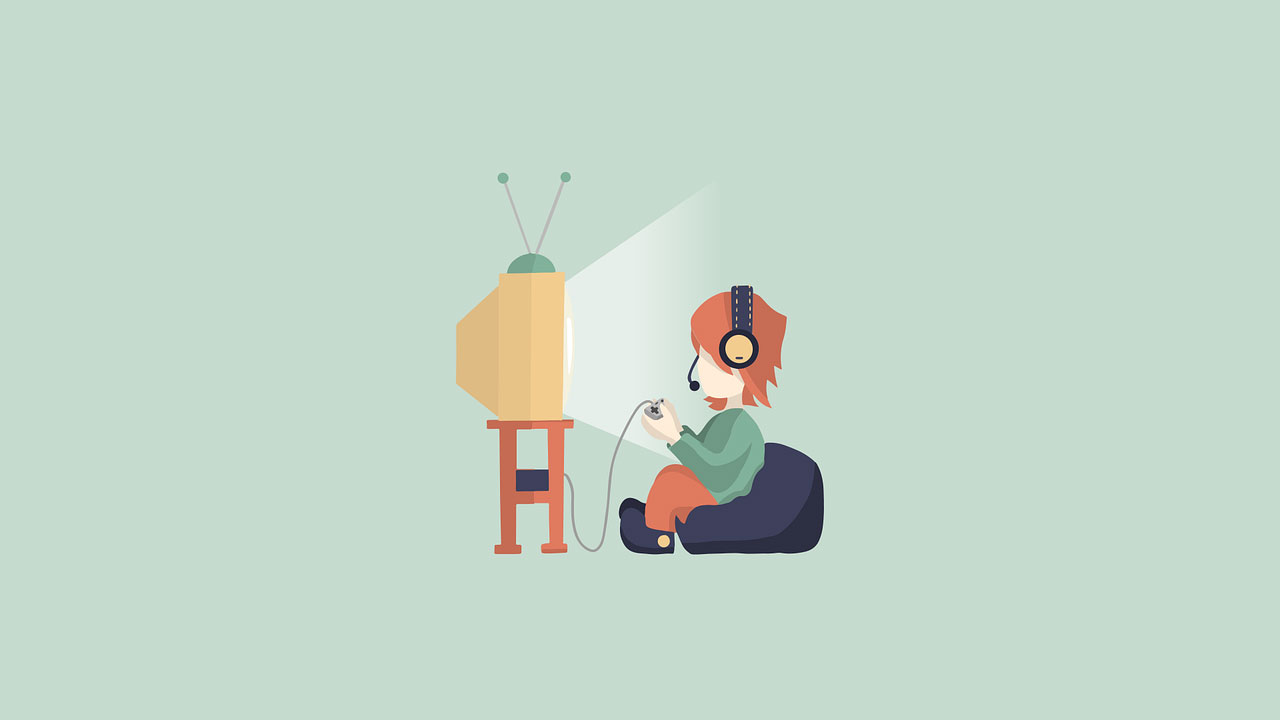

Here is how to make any sports fan angry. Basketball is just a bunch of grown men bouncing a ball and throwing it into a basket. Football is a bunch of grown men running on grass trying to kick a ball into a net, yes that football. And baseball... Oh boy, baseball.
I've used these lines many times to piss people off and to justify my complete lack of athletic feats. But the counter-argument I always get is that football is a multi-billion-dollar industry, or that a specific player makes more money than I will ever see in a lifetime. If I counter that video games are just for kids, because of course I'd say that, I get a similar response: Video games make more money than all of these sports combined.
It's all true. But nobody is telling me why basketball is important. Nobody tells me how good the game is, how people bond over it, how it brings a community together, or that it is simply healthy to stay active. Whether it's basketball, football, video games, or (God forgive me) baseball, it all boils down to the exact same measuring stick: how much money the activity generates.
If the importance of a thing is only measured by how much money it makes, then we will aim to make more money despite the thing itself. — An AI Somewhere.
Goodhart's Law states that when a measure becomes a target, it ceases to be a good measure. Enter Artificial Intelligence.
This wave of generative AI has supposedly generated billions of dollars since ChatGPT first launched. But in the process, vastly more money was spent to make it possible. Money was spent to make AI look good. AI is deemed "good" because it is expected to make lots of money. Because AI isn't actually making that money back yet, it relies on inflated valuations to define its worth in monetary terms.
It's like running a pizzeria where the goal is to make a million pizzas, but you don't actually have the ingredients to bake them. Instead of buying flour and tomatoes, you use AI to generate high-resolution photos of delicious pizzas and print them on empty boxes where the future pizza will be. You sell the hype of the box, promising that the actual pizza will arrive once the funding hits.
There is this simple argument, almost naive I would say: If AI is going to take all our jobs, who is going to pay for it?
If workers are displaced, they have no income. If they have no income, they have no purchasing power. Who is this mythical customer who doesn't work, receives no paycheck, yet seamlessly pays a monthly subscription for enterprise AI tools?
Currently, the primary consumer of AI isn't the public buying a finished product. Instead, it's corporations selling AI back and forth to each other in an enterprise circular economy, funded by venture capital that expects infinite returns on a product nobody has fully figured out how to monetize at scale.
This may be an anecdote where N = {"my coworkers over the past four years"}, but in that short timespan, we were visited by the Four Horsemen of Corporate AI.
The First Horseman told us never to touch AI, warning of IP theft and security leaks. The Second Horseman told us to use it cautiously "where needed." The Third Horseman turned AI into a game, tracking metrics to see who could use it the most, (the winner got a free iphone). The Fourth Horseman arrived recently, asking us to stop using Fable, and get written managerial approval to exceed a reduced token budget.
Each horseman was a paid consultant hired to provide training. In just a few years, corporate sentiment swung from paranoia to forced obsession, and finally to budget panic. Employees went from being pushed to "Tokenmaxx" everything to being scolded that tokens cost real money.
AI is important because we spend so much money on it.
When an industry measures success by the dollar amount poured into it rather than the actual utility derived from it, we start living in a fantasy. We spent astronomical sums of money to build AI because we believed it was valuable. Now, we must prove it is valuable simply because we spent all that money.
If we keep measuring the value of technology solely by market capitalizations and speculative hype rather than usefulness, we shouldn't be surprised when people stop buying empty pizza boxes. Beautifully printed empty pizza boxes I should say. Right now, we are running out of money to buy the ingredients to actually make the pizza.


Join the Conversation