
Whenever I hear someone express a thought really well, like they make a sharp observation, tell a funny story, or just have a moment of clarity, I ask the same question: "Why don't you have a blog?"
Their answer is almost always a variation of, "I don't know what to write about."
They fail to see that the idea they just shared is the thing worth writing about. In that moment, they weren't worried about credentials or impact; they were just sharing something interesting. That's the entire point.
Sure, blogging isn't the mainstream medium for sharing ideas it used to be. The generation raised on polished social media often sees writing with a higher, more intimidating bar. You need to be an expert. You need perfect prose. You need a universe-altering thesis. I'm here to tell you that you don't need any of that.
Your blog, before being anything else, is your own property. It's a public notebook. It belongs to you. There are no rules. You can write about anything, in any format you like. But I understand the hesitation. We are taught early on that ideas worth recording must be monumental.
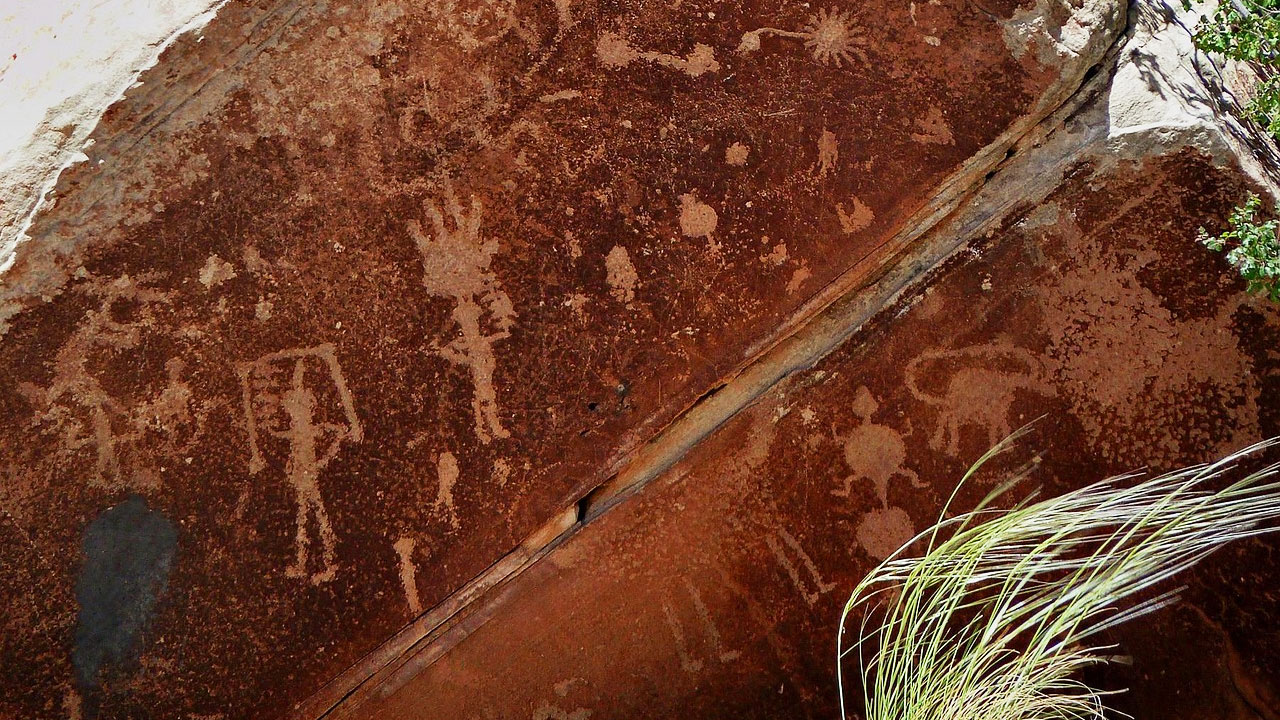
I remember the first year of middle school, when we started learning real history. Our textbook began with prehistory: Cro-Magnons, Neanderthals, those mysterious paintings in dark caves. Then it swept through Egypt's pyramids, the Roman legions, the rise of empires and religions, finally landing in the modern technological age of the '80s.
I can't remember the book's name, but I've never forgotten the question it planted in me: Who decided what needed to be recorded?
For every grand pharaoh or world war that made the cut, countless stories were left out. The everyday lives, the small discoveries, the personal triumphs and failures of millions of people, all erased by the sheer selectivity of history. We only see the peaks, never the vast, rich landscape that lay between them. And because I went to school in several countries, those peaks often varied depending on which country you were in.
When people say they don't know what to write about, they're thinking like that history textbook editor. They believe every blog post needs to be a chapter on pyramids. It needs to be concise, complete, and deeply impactful. It needs to be a civilization-defining monument.
But real life isn't like that. It's not all Marvel movies, where the fate of the universe hangs in the balance. It's more like those quiet, beautiful indie films where the stakes are relatable. A protagonist mustering the courage to ask a girl out, a person navigating a frustrating commute, some kids on a quest to get to a White Castle burger joint. The universe isn't at stake; just a tiny, precious piece of a single human heart. And that is more than enough.

You don't need cosmic stakes to have a compelling story. You just need a story that is true to you. It's a lot like creative nonfiction. You're basically telling a true, factually accurate story, focusing on real-life experiences but filtered through your personal perspective for deeper meaning.
Writing it down in your blog is a way of preserving it. It's how you structure that fleeting thought or experience into something you can revisit, and that others can understand and, hopefully, relate to. It's your own cave painting.
When I get someone excited about having their own blog, there is a second question that always follows: "What if people don't like it?" Another variation is: "What if my blog post is wrong?"
I have an answer to that as well: "Good news, nobody is going to read it." At least not right away. Really. That's a good thing:
Your initial blog is your personal training ground. It's where you get to be bad, be wrong, and learn to be better, all without the pressure of an imagined audience. It gives you the crucial time and space you need to write enough, refine your craft, and eventually produce something you genuinely want people to read.
It's your rehearsal space. It allows you to write without the pressure of an audience, to find your voice in the quiet. When I find myself worrying that my life is too boring to write about, I remember these words from the story "Bored" by Regie Gibson:
The most interesting people you will ever meet are also the most interested.
In your rehearsal, you will learn to see the interest in your own mundane. You don't have to invent dramatic parts. Just observe your life from a slightly different angle. Find the universal thread in your specific experience. The minor frustration, the small joy, the momentary confusion. These are the building blocks of human connection.
So, what should you write about? Write about the question that popped into your head in middle school. Write about the first time you drove in an electric car. Write about the thing you just explained so well to a friend. Don't write for the history books. Write for your notebook. Paint your cave.
Trevor Noah, the comedian, recounts being stressed out about being the opening comic before Dave Chappelle. He asks Dave for advice, and this is the answer he got:
"You are not here because you are funny. [...] You are here because you are interesting."

Join the Conversation