
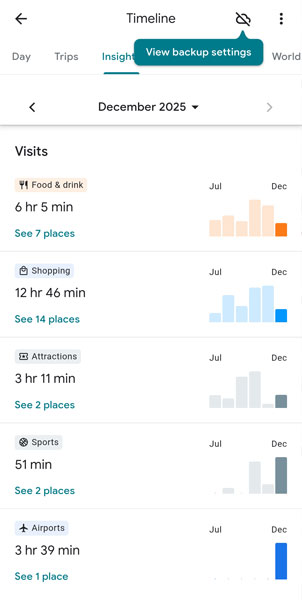
I was watching a movie when I got a random notification from Google Maps on my phone. I never get notifications from this app unless I'm doing turn-by-turn navigation. This one was titled "Timeline," and Google was requesting if I wanted to turn on backups for this feature. This section of Google Maps that I had never visited drew a timeline of every place I've ever visited: home, work, grocery store, etc. All this without me explicitly asking it to track these things. Now I see where I go to lunch every day, I see where I walk, drive, shop, and everything in between.
It got me thinking: All the tools for mass surveillance are in place. And they are not going away.
LLMs are expensive, they are inefficient, and they might just bankrupt the US economy. If the AI bubble pops, are we going back to a pre-AI world? Is ChatGPT gonna disappear? Will Google retire their AI Overview from search? No. Most likely not. Now that we have the tech, as wasteful as it is, it's not going anywhere.
Recently, I read of a software developer who bought a Grace-Hopper NH200 system on Reddit for just €7,500 (about $8,000). That's a dual H100 GPU enterprise server that normally sells for over $100,000.
After some extensive modifications, including converting it back to water cooling, fixing sensors reporting 16 million degree temperatures, and free-soldering damaged components under a microscope, the developer had a working AI powerhouse for under $10,000 total. It could run 235-billion parameter AI models from a desktop at home.
When the AI bubble pops, this hardware won't disappear. It'll flood the secondary market. Enthusiasts, researchers, and small companies will be able to buy enterprise-grade AI hardware for pennies on the dollar. As I wrote in my previous blog post, If the bubble pops everyone gets a free graphic card.
Once a technology exists, it's not going back in the box.
The Infrastructure Is Already Built
Now, in the same vein, we have all the tools we need to make mass surveillance (MS) a reality. Compared to AI data centers, MS data centers are relatively cheaper. It may require a massive amount of data, but the compute is much cheaper.
In fact, we can use AI, much less demanding models than the GPTs, to enhance mass surveillance. Think about what's already deployed:
Location Tracking by default
That Google Maps Timeline notification I received wasn't a bug; it was a feature I never asked for. Google had been silently tracking every coffee shop, every grocery run, every deviation from my routine. The data was already there, neatly categorized, timestamped, and ready for analysis.
And Google isn't alone. Apple has similar features. So do countless other apps on our phones that request location permissions for "enhanced functionality." Every ride-sharing app, food delivery service, weather app, and social media platform with location tagging creates another data stream. Your phone company tracks which cell towers you're near. Your car's GPS system logs where you drive. Fitness trackers record your jogging routes.
The infrastructure for comprehensive location surveillance doesn't need to be built, it already exists in your pocket.
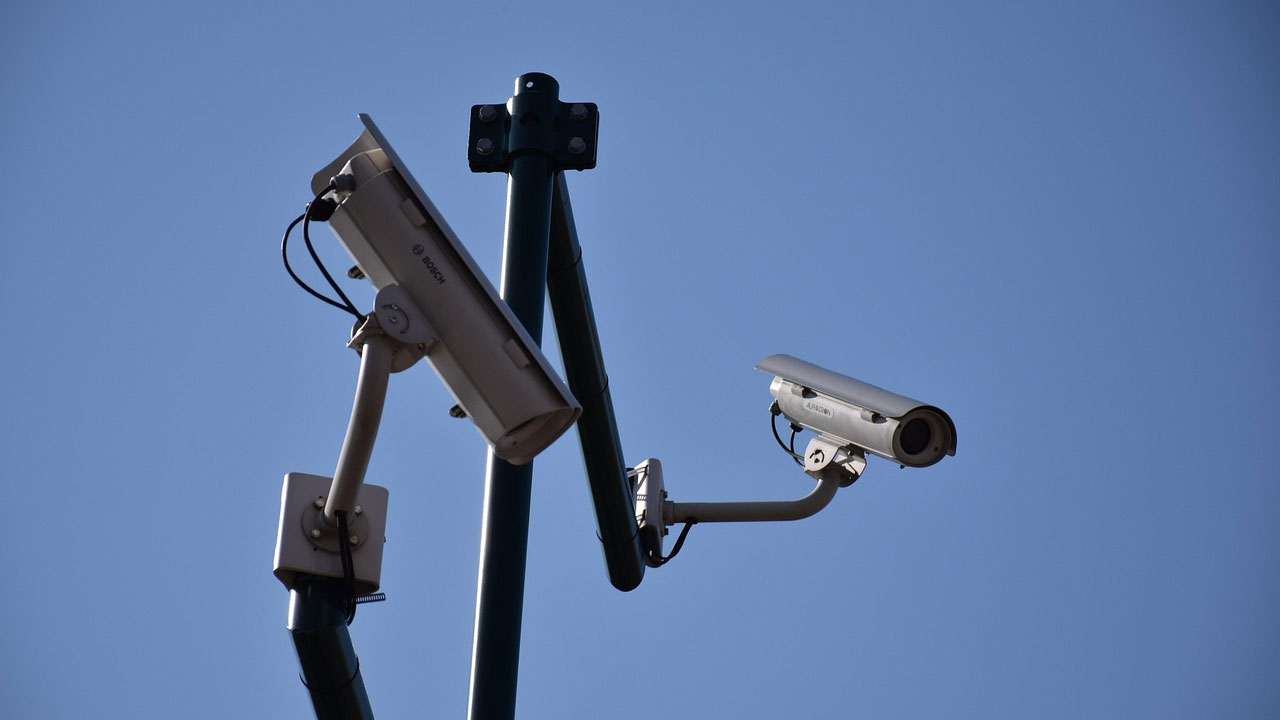
Visual Surveillance Blankets Our Cities
Flock Safety cameras are installed at neighborhood entrances across America, capturing license plates and vehicle descriptions 24/7. These aren't just recording. They're actively identifying, categorizing, and creating searchable databases of vehicle movements.
Ring doorbells record our comings and goings from every front porch. Stores use facial recognition to track "repeat shoppers" and identify suspected shoplifters. Cities install cameras at intersections, in parks, on public transportation.
The hardware costs keep dropping while the resolution keeps improving. Security camera systems that cost thousands a decade ago are now available for a few hundred dollars. 4K resolution is standard. Night vision is common. And they're all networked, all recording, all creating permanent digital records.
Audio Surveillance Lives in Our Homes
Amazon Alexa, Google Home, Siri, they are always listening for their wake words. How much else are they hearing? Smart TVs with built-in microphones. Apps requesting microphone permissions for no reasons. Your phone's voice assistant that somehow serves you ads for things you only mentioned in conversation, never searched for, never typed.
Baby monitors, smart doorbells with two-way audio, security systems with audio recording, even smart refrigerators with voice controls. We've voluntarily placed listening devices throughout our most private spaces, connected them to the internet, and trusted corporations and cloud services with the data they collect.
Digital Breadcrumbs Everywhere
Credit card transactions track every purchase, creating detailed profiles of individual consumer behavior. Website cookies follow you across the internet. Social media check-ins announce your location publicly. Fitness trackers log your heart rate, sleep patterns, and daily activity levels.
Smart home devices track when you turn on lights, adjust thermostats, or open your fridge. Email scanning for "better targeted ads" reads your private correspondence. Search history reveals your interests, concerns, and questions. YouTube watch history shows what captures your attention.
Your smart TV knows what you watch and when. Your streaming services know your viewing habits in exhaustive detail. Your e-reader knows which books you read, which passages you highlight, and where you stop reading. Your social media platforms know who you interact with, what content you engage with, and how long you spend on each post.
Every app login, every website visit, every online transaction, every connected device creates another entry in your digital profile. The breadcrumb trail we leave behind is so detailed that it's possible to reconstruct someone's daily life with accuracy, without ever conducting physical surveillance.
AI Makes It Exponentially Worse
You don't need the GPTs or LLMs in massive resource gouging data centers to run AI that enhances mass surveillance. With much simpler models that run on your common laptop you can match faces across camera feeds. You can identify patterns in location data, transcribe and analyze audio. Predict behavior, flag anomalies, generate alerts.
These models run on older, cheaper hardware. They're already being used by law enforcement agencies, marketing companies, and governments worldwide. The technology that seemed science-fiction a decade ago is now commodity software available on GitHub.
And remember that Grace-Hopper system bought for $8,000? That level of computing power capable of processing millions of surveillance data points in real-time will become accessible as enterprise hardware floods the secondary market. You don't need a billion-dollar budget to run sophisticated surveillance systems anymore. You just need to wait for the next market correction.
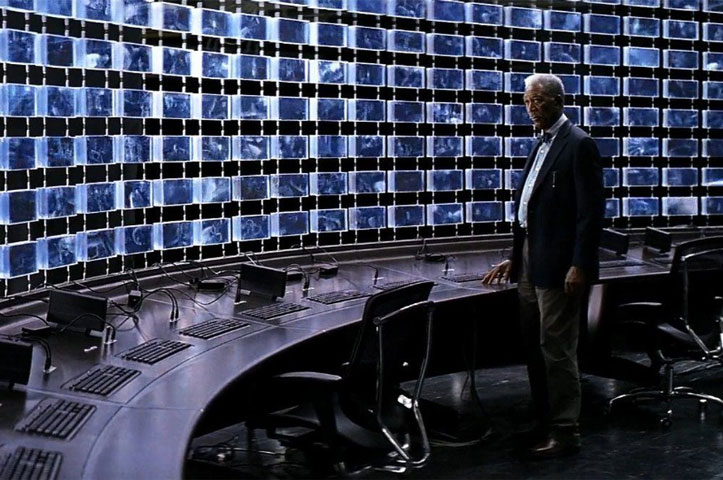
The narrative around surveillance often suggests we're approaching some threshold, some point where we need to be vigilant about preventing mass surveillance from becoming reality. But that framing is outdated.
The infrastructure for mass surveillance is already deployed, running quietly in the background, waiting for someone to fully exploit it. Every camera, every microphone, every GPS chip, every networked device is a node in a surveillance network that already spans the globe.
The data is being collected. The hardware is in place. The AI models to analyze it are available. The connectivity exists. The storage is cheap. The compute is getting cheaper by the day.
We're not at some decision point where we can choose whether to build mass surveillance infrastructure. That choice was made incrementally, one convenience at a time, one app permission at a time, one smart device at a time. We already made it.



Join the Conversation